

Indoor Air Pollution: Improving Air Quality in Your House
Indoor air quality affects how we feel every day, even when we cannot see or smell a problem. Here is what is really in your home's air, where it comes from, and simple steps you can take to clean it up.
What is indoor air quality (IAQ)?
Indoor air quality, or IAQ, is the condition of the air inside a building. It covers the air we breathe at home, at work, and everywhere else indoors, and it plays a big role in our health and comfort.
IAQ depends on a few key things: how many pollutants are in the air, how well the space is ventilated, and how humid it is. Together, these factors decide how the air actually feels and how it affects your body.
To understand IAQ, it helps to think about three types of contaminants:
- Particulate matter, such as dust and pollen
- Chemical pollutants, such as formaldehyde and benzene
- Biological contaminants, such as mould and bacteria
Poor IAQ can lead to real health problems, which is why regular monitoring and small corrective steps matter so much.
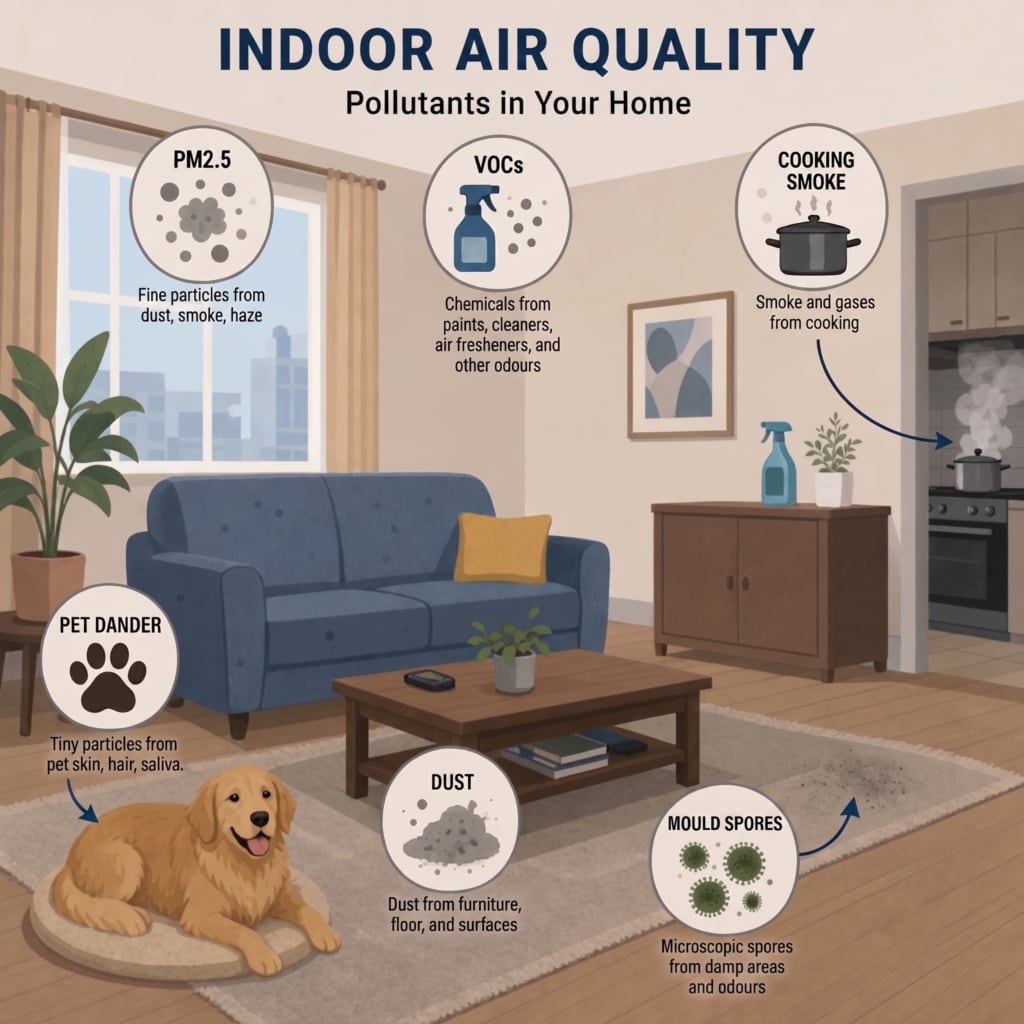
Common indoor air pollutants and contaminants
Several types of pollutants can lower the quality of the air in your home. Knowing what they are is the first step to dealing with them.
Biological contaminants
Mould, bacteria, and pet dander are common allergens. They can trigger breathing problems and make asthma worse. Regular cleaning helps keep them in check.
Chemical pollutants
Volatile organic compounds (VOCs) are often found in everyday household products like paint, cleaners, and air fresheners. Choosing low-VOC products lowers their impact.
Common pollutants include dust, mould, pollen, and pet dander. Common chemical pollutants include formaldehyde, benzene, VOCs, and tobacco smoke. Fine particles such as dust and soot can also get deep into your lungs, so good filtration matters.
Where does indoor air pollution come from?
Pollution inside your home comes from both natural and human-made sources.
Natural sources
- Mould growth in damp areas like basements and bathrooms
- Outdoor pollen entering through windows and doors
- Pet shedding and dander
Human-made sources
- Smoking indoors
- Certain cleaning products
- Stoves and appliances that are not properly vented
Building materials matter too. Many construction products slowly release formaldehyde and other VOCs over time, so it pays to stay informed about what is in your home.
Health effects of poor indoor air quality
Poor air quality can affect your body right away or over time.
Short-term effects
Irritated eyes, nose, and throat are common early signs. They may seem minor, but they can still be uncomfortable and distracting.
Long-term effects
Years of exposure can lead to chronic conditions like asthma and bronchitis, and may raise the risk of some other illnesses.
Potential effects include allergies and asthma, respiratory infections, and fatigue or headaches. Children, older adults, and people with existing health conditions are usually the most affected, so protecting indoor air quality is really about protecting the most vulnerable members of your household.
How to assess the air quality in your house
You do not need special training to start checking your home's air. Begin with what you can see and smell:
- Inspect for visible mould or water damage
- Use household air quality monitors to track VOCs, particulate matter, carbon monoxide, and radon
- Check for unusual or persistent smells
For a more detailed picture, a professional can test for specific pollutants such as radon or formaldehyde. Regular check-ins help you catch problems early, before they turn into bigger issues.
Key factors affecting indoor air quality
Ventilation
Proper clean airflow dilutes indoor pollutants and keeps fresh air moving through your home.
Humidity
High humidity encourages mould and dust mites. Keeping humidity between 30% and 50% helps reduce both.
Other factors
- Pollution sources: tobacco smoke, cleaning products
- Home design and furnishings: materials that release VOCs
- Outdoor influences: pollutants drifting in from outside
Practical steps to improve air quality in your house
Boost ventilation and control humidity
- Open windows regularly, when outdoor pollution is low, especially while cooking or cleaning
- Use a dehumidifier in damp areas like basements
- Install exhaust fans in kitchens and bathrooms
Filter and clean smarter
- Use an air purifier with a HEPA filter (or Polarized Media) to trap fine particles
- Adopt a no-shoes policy to cut down on tracked-in dirt
- Dust and vacuum often to control allergens
- Change HVAC filters every few months
Choosing low-VOC or VOC-free cleaning and maintenance products also cuts down on chemical fumes indoors.
The role of technology in indoor air quality
Smart devices now offer real-time air quality monitoring, alerting you to pollutants and changing conditions as they happen.
- Smart thermostats: help optimize your HVAC system for better air circulation
- Air quality sensors: track pollutants like VOCs and particulate matter around the clock
Frequently asked questions
What are the main sources of indoor air pollution?
The biggest sources are everyday items and habits: cleaning products, tobacco smoke, pet dander, mould, and materials in furniture and building products that release VOCs over time.
How often should I test my indoor air quality?
A basic check, using a household monitor or simply watching for odours and visible dust or mould, is worth doing every few months. A professional test is useful if you notice ongoing symptoms.
Can houseplants really improve air quality?
Houseplants add a nice look to a room, but their effect on indoor pollutants is minor. A room would have to be filled with plants for a positive impact in IAQ. Houseplants also have the potential for introducing pollutants including mould. Ventilation, filtration, and source control do the real work.
Build a healthier home, one step at a time
Improving air quality is an ongoing process, not a single fix. Regular maintenance, the right products, and a bit of awareness go a long way. See how SolaceAir's whole-home products can help.
See Our Products